Marketing Hotline:
(+86)0532-88988868
(+86)0532-88988868
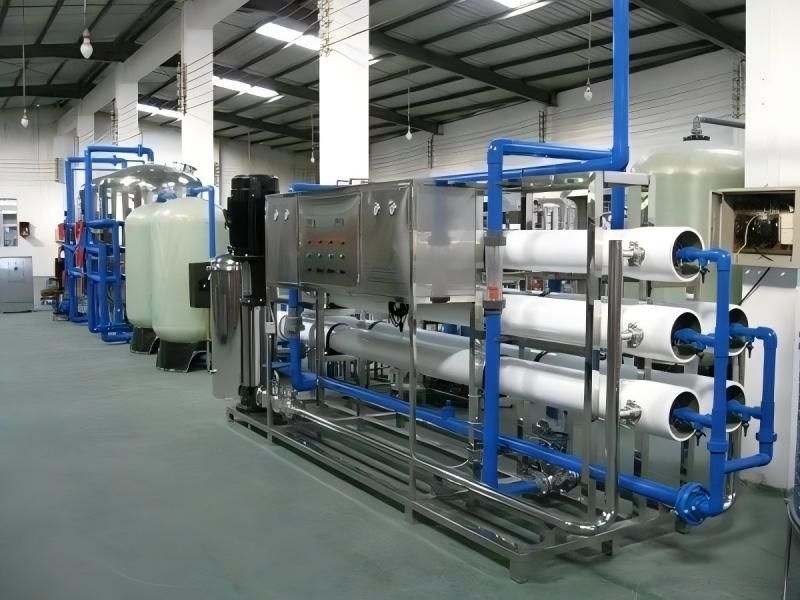
In industrial production, stable and high-quality desalinated water is the key foundation for ensuring production efficiency, improving product quality, and reducing equipment wear. To meet the large-scale water production needs of enterprises, the 20-ton single-stage reverse osmosis desalinated water equipment, with its core advantages of efficient desalination, stable operation, and energy savings, has become the preferred choice for chemical, electronics, power, and pharmaceutical industries. Today, we’re taking a close look at this core equipment that fits the industrial water production needs for all our procurement colleagues.
Core technology advantages, building a solid defense for water quality
The 20-ton single-stage reverse osmosis desalination system uses advanced single-stage RO technology, equipped with high-desalination RO membrane elements. It efficiently removes impurities like suspended solids, colloids, organics, and heavy metal ions from the raw water, achieving a desalination rate of over 98%. The produced water’s resistivity stays stable at 1–10 MΩ·cm, fully meeting the water quality requirements for key industrial applications like boiler feedwater and process water.
The system comes with an intelligent PLC control system, which can monitor key parameters like water output, water quality, and membrane operating pressure in real time. It enables fully automatic start and stop, smart fault alarms, and automatic membrane cleaning. This not only greatly reduces labor costs but also effectively prevents water quality fluctuations and equipment failures caused by human error, ensuring stable and continuous water production.
On the energy-saving side, it uses high-efficiency energy-saving pumps and optimized piping layout to significantly cut operating energy consumption. The RO membrane elements are made of anti-fouling materials, which extend their service life and reduce the frequency of membrane replacement, further optimizing the company’s long-term operational costs.
Diverse adaptable scenarios: covering industrial water needs across all sectors
This device's water output precisely matches the daily needs of medium to large enterprises, and it can be used across a wide range of industrial settings. Specific applications include:
1. Chemical industry: Used for replenishing water in chemical reactors and for purification processes in chemical products, helping to avoid impurities that could affect reaction efficiency and product purity;
2. Power industry: Serves as a core piece of equipment for boiler feedwater treatment, reducing scaling and corrosion risks, extending boiler life, and ensuring the efficient and stable operation of the power generation system;
3. Electronics industry: Provides high-purity demineralized water for cleaning electronic components and semiconductor production, preventing impurity-related defects and ensuring the quality of precision manufacturing;
4. Pharmaceutical industry: Meets the strict water requirements for drug production processes and cleaning, in line with GMP certification water quality standards;
5. Food and beverage industry: Used in key stages like raw material washing and formula water, ensuring the safety and consistent quality of food and beverage products;
6. Seawater desalination: Fits the water needs of coastal industrial enterprises, efficiently converting high-salinity seawater into qualified industrial desalinated water, effectively addressing freshwater shortages in coastal areas and reducing the cost pressure of purchasing water.
Helps companies cut costs and boost efficiency, strengthening their core competitiveness.
For a company's procurement work, choosing a 20-ton single-stage reverse osmosis desalination water system is not just a basic measure to meet the essential production water quality, but also an important decision to help the company cut costs, improve efficiency, and strengthen core competitiveness. Its core value is reflected in the following aspects:
1. Quality Control: Stable water quality can effectively reduce losses caused by production interruptions or product waste due to substandard water, significantly improving the stability of the production system.
2. Cost Optimization: The equipment offers low energy consumption, easy maintenance, and long-lasting parts, meaning long-term operating costs are much lower compared to traditional desalination systems.
3. Strong Adaptability: The system can be customized with pretreatment and core filtration setups based on different raw water qualities (like tap water, groundwater, surface water, seawater, etc.), ensuring stable and compliant operation under various water conditions.
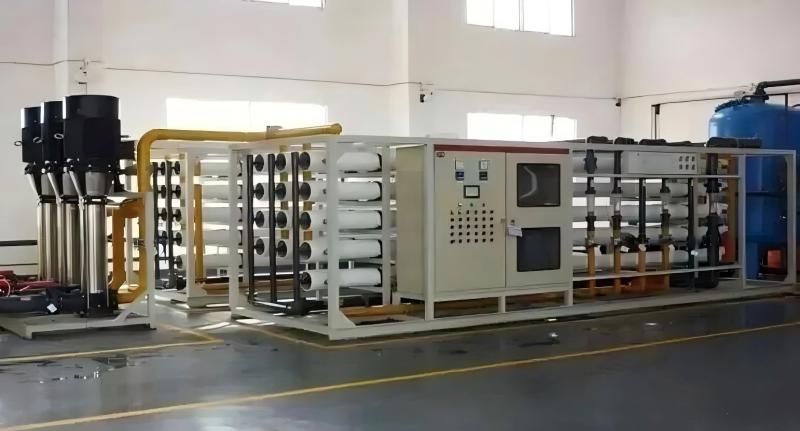
High-quality desalinated water treatment equipment is a key infrastructure for upgrading production in enterprises. The 20-ton single-stage reverse osmosis desalination system, with its efficient, stable, and energy-saving advantages, fully meets the needs of traditional industries like chemical and power sectors, as well as special scenarios like seawater desalination. It provides comprehensive and reliable industrial water solutions for medium to large enterprises and coastal industrial companies. If a company needs to upgrade its industrial water supply or is facing a shortage of freshwater in coastal areas, this equipment is definitely worth checking out. Using professional equipment can help boost production upgrades and achieve cost savings and efficiency gains.