Marketing Hotline:
(+86)0532-88988868
(+86)0532-88988868
Cities generate a large amount of domestic sewage every day. If sewage is discharged recklessly, it will pollute the air, soil, and water, causing serious environmental impacts. Today, let's learn some basic knowledge about urban sewage treatment.
1. Sewage Treatment Goals
The pollutants in urban domestic sewage mainly include organic matter, nitrogen, phosphorus, and others. The goal of sewage treatment is to remove these pollutants, prevent water eutrophication, and protect the environment.
2. Wastewater Treatment Process Flow
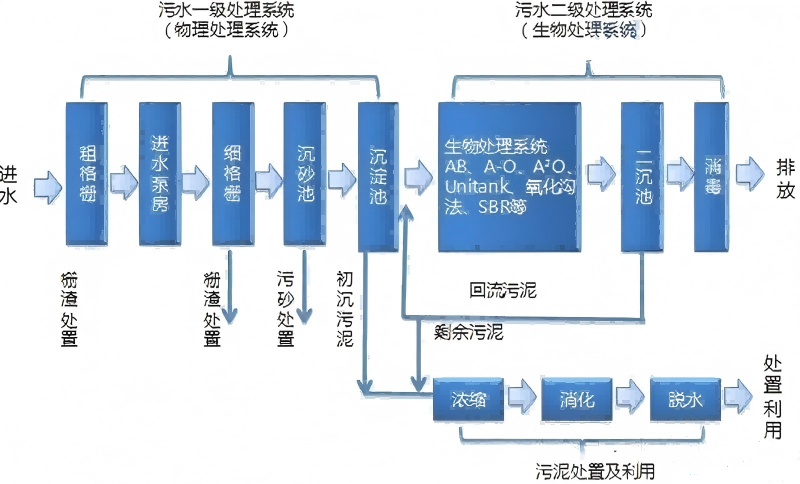
Urban wastewater treatment generally includes three stages: primary treatment, secondary treatment, and tertiary treatment.
★ Primary treatment mainly uses physical methods to remove suspended solids and floating materials. Treatment methods primarily include screening and sedimentation; treatment facility structures mainly include screens, grit chambers, and primary sedimentation tanks.
★ Secondary treatment uses biological methods to reduce organic matter content and remove nitrogen and phosphorus. Treatment methods mainly include the activated sludge process and biofilm process; treatment facility structures mainly include anaerobic tanks, anoxic tanks, aerobic tanks, and secondary sedimentation tanks.
★ Tertiary treatment applies physical and chemical methods such as coagulation, filtration, ion exchange, reverse osmosis, and disinfection to wastewater that has undergone primary and secondary treatment, removing poorly soluble organic matter, phosphorus, nitrogen, and bacterial nutrients. After treatment, the turbid wastewater undergoes a complete transformation, meeting the discharge standards of municipal wastewater treatment plants and providing ecological and landscape replenishment for rivers.
3. Cultivate Good Drainage Habits
1. Reject 'a single drop of oil' by pouring oil into a recycling bin instead of the drain;
2. Precisely sort garbage; tablets, chemicals, wet wipes… these 'hidden killers' should not be flushed into the toilet;
3. Cherish every drop of water; shorten shower time, fix leaking faucets, and reducing sewage generation is a way to lessen the ecological burden.
Sewage treatment is a long-term and continuous task that requires constant supervision and maintenance to ensure the normal operation and effectiveness of treatment facilities. Only through scientific methods and processes can sewage be effectively treated, achieving resource conservation and sustainable environmental development. Let us work together to contribute to building a beautiful ecological environment!